Friday, July 26, 2013

China Pakistan Friendship, long history seeking for new future

Introduction.
1.   Keeping in mind more than fifty years of Pakistan China relation, most of Pakistanis are still living in perception 1960s China generation. Mind mapping of China, still appears blur images of cheap labor and low quality goods, weak communication infrastructure and steam engine trains; most importantly a country seeking outlet for international market. However, China had been drastically changed itself since 1979, once China was open to international market, although Geo-startegical importance of Pakistan still exist in the region, but international relations are not govern by mutual friendships rather countries are more inclined towards mutual interests. China is a growing economy, at present China India trade volume is US $ 60 billion (expected to be increased to US $ 100 billion in coming years). Pakistan is economical partner with China with only US $ 12 billion in mutual trade.
2.  Chinese economy is gaining growth exponentially, she is internationally competing with US. Under these circumstances, resent developments in South Asian Region have direct or indirect impact on Chinese economy. Keeping this aspect in mind, Pakistan has to re- evaluate its role in South Asia visualizing the future of Pakistan China relations.

3.  Scope of this Paper. To analyze major problems in South Asia related to China in conjunction with Pakistan role and recommend viable measure to improve Pakistan China relation in future.

Areas of Interest for China

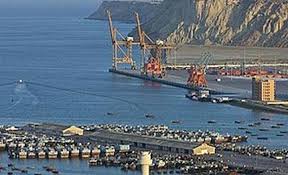
4. Gwadar Port.China has heavily invested in developement of Gwadar port. development of Gwadar port of speedy grounds is not only having direct implications on Pakistan, but at same time China is also major beneficiary. Gwadar provides an alternative route and short route to China.

5. Trade Energy corridor. China is energy hungry to feed its fast flourishing economy. Gulf countries are fulfilling the energy needs, to bypass strait of Malacca and squeeze the shipping distances Pakistan can provide  an energy corridor. 

6. Stable Afganistan. Stability in Afghanistan, specially in the back drop of 2014 ISAF withdrawal is questionable. Pakistan is internationally considered as the major player to bring stability in Afghanistan. Unstable Afghanistan is not in interest of China. China is already investing heavily in Afghanistan.  In addition to economical factor, resent clashes in Eastern provinces of China has proven links of Afghanistan based extremist groups which is problematic for China.

7. Taliban Factor.  It is condered that Pakistan is backing Taliban based government in Afghanistan, which is not acceptable to international community unless Taliban-ization is linked with terrorism.

Recommendations

8.  Issue of Baluchistan has to resolved at priority, problems of locals have to addressed in a manner to bring peace in Baluchistan. Unstable Baluchistan will hamper development of gwadar port and tapping full potentials of Gwadar prt would remain questionable.

9. Pakistan has to develop Trade energy corridor till China in first phase and later on same can be extended towards Central Asian Region. Development of Highways, railway link and pipelines are essential.

10.  Afghanistan problem has to resolved as per the aspirations of Afghan people. Pakistan may utilize its influence to stabilize the region  as some as possible.

11. China can no longer provide cheap labor to world, now is the right time to attract Chinese market to establish in Pakistan. This opportunity has to rested at the earliest.

Conclusions. In international relations there are no mutual friends or enemies, there are only common interest. Economical interest is the major bonding factor between two nations. Pakistan Geo- strategic position in the region can not benefit Pakistan for longer period, till the time economical, industrial and market designs are not filled between Pakistan- China.

Friday, May 10, 2013

CIVIL – MILITARY RELATION IN PAKISTAN


Introduction.
·                    Healthy civil military relations contribute alot to enhance the efficiency of a nation. In open societies civil establishment and military institutes work in hand and gloves with political government; where political government is having the final control on national decisions. Although, in developed democracies incidences of military over step their powers is common. In 1986 Indian Army Chief planned to convert Army exercise into operation on Pakistan without the knowledge of Indian prime minister, moreover, removal of ISAF command Gen McChrystal from Afghanistan on the pretext that his conduct could undermine civilian control over military are few examples from present time.  Civil military relation is sharing a balance between both the institutions with in their limits without derailing the political process.

·                   Pakistan since its creation has witnessed very dominating military relations with civil government, where the military take overs were common. Political scholars believe that, major causes of military interventions are political and such interventions are primarily due to weakness in political setup rather than desires of military institutions.  So far there has been four military coups in Pakistan; starting from Gen Ayub Khan and last one by Gen Musharraf. Derailing of legitimately elected political government cannot be beneficial for Pakistan, it is important to analyze factors which are contributing in military takeover in Pakistan.


Conceptual boundaries.                Analyze the reasons for civil military imbalance in Pakistan and review present power sharing between civil and military institutions. In the end recommend viable measures to eradicate causes of this imbalance.
Scope.

  • ·         Weakness in Political System
  • ·         Civil Military relation after 2008 elections.
  • ·         Recommendations

Analysis of weaknesses in Political system.        As it is widely believed by political experts that military interventions and takeover are mainly caused due to weaknesses in political system and not because of the social characteristics of military institutions. Therefore following are few weaknesses which have become glaring in the past.

  • ·         Lack of political leadership.        Quaid-e- Azam died very shortly after the creation of Pakistan, after him Liquat Ali Khan took of the leadership of Pakistan, but after he was shot they was no other prominent political in the screen of Pakistani politics. Pakistan resorted upon Bureaucrats and military generals. Moreover, due to frequent military coups political environment was not created in the country to flourish new leadership.

  • ·         Nonexistence of Political parties. Pakistan Muslim League, which played pivotal role in creation of Pakistan, was deficient of politicians as most of them preferred to stay in Union of India. Feudalists, industrialist and bureaucrats were remained as the only option.  These newly generated/ created politicians were unable to inject political / ethical and administrative norms in Pakistan politics. Once they were in assemblies, were unable to for see the power vacuum they were creating due to internal rifts.

  • ·         Frail institutions.             After partition, whatever share Pakistan received from armed forces, bureaucracy, judiciary and other elements was already in bits and pieces. Pakistan was also lacking secretariat, courts, parliament and other set ups which are important for functioning of government were not fully established. Pakistan had to start from scratch and thereby institutional discipline, norms and cohesion had to be developed. One such case was refusal of Army Chief to send troops to Kashmir to stop Indian aggression as ordered by then Governor General Quaid-e-Azam.

  • ·         Dependency of Civil over Military.          Being deprived of all other institutions, Pakistan Government had to resort on its military components for all civil matter, either it was related to security of people coming from India or helping people of Pakistan against natural calamities. In one way or another, Civil Government handicap towards army become more obvious with every coming day.

Civil Military relations after 2008 elections.        Political and social picture of Pakistan would remain incomplete without taking in to account the military dominance and its role. Gen Ashfaq Pervez Kayani has supported civil government and his actions speak better than words. However, it is obvious that this state institution is having the capacity, experience and power to overshadow any democratic government.  So what are the factors, which are stopping present military setup? Major factors are explained in detail as under:-
·         Restoring Military Image.           After 2007, Army was more concerned to improve its image in general public. A direct military action was out of question, even though loud and vivid political signals were available.
·         Large Scale proliferation of political activities. Since 2007, social and political activities were at large, restoration of Chief Justice of Supreme Court, probing of Benazir Murder Case was in high tone, and more or less political activities were accelerating in high pace. This all created a difficult situation for military or bureaucracy to show direct involved in Government affairs.
·         Civil military hand shake for War Against Terrorism.    Pakistan Army was actively involved in War against terrorism, and nation consensus was essential to provide national power to military efforts, moreover civil government was also in need to continue these operations. So keeping a civil military equilibrium was a Win-Win situation.
Supreme Court of Pakistan
·         Complex dynamics of military Coup.     Gen Ashfaq Pervez Kayani remained firm and provided constitutional and democratic support to government despite “memo gate scandal” . Public mood was not in favor of any military intervention, free media and complex national/ international crisis doesn’t advocate such a venture.
·        Hyperactive Judiciary.  Above all, any adventure would turn into misadventure, as it was clear that it would not be supported or promoted by judiciary. Hyper active stance of Chief Justice and suffering from last coup were not diminished from his memories.
Recommendations.        It is well established fact Pakistan cannot sustain derailing of any democratic government.  Few recommendations to ward off this threat in future are as under:-

  • ·         Overlapping decades of dictatorship and elected government had already crippled the political parties. Military interventions can be reduced by addressing the international/ national security concerns of Armed Forces and viable solutions should be worked out mutually.

  • ·        Political parties should follow party code of conduct, where discipline of party members should be scrutinized strictly. Ethnicity, nepotism and religious extremism are required to be flushed out of politics. Strong political parties can provide strong leaders and thereby providing masses a fair choice.

  • ·        National intuitions of security, intelligence, law and order agencies should be strengthen to such a level that calling Armed forces in aid of civil power could be minimize.

  • ·         Military component is the force to implement political Will. Therefore military operations and national policy should complement each other.

  • ·         Positive dynamic social and political activities without disturbing the states affairs has direct bearing in strengthening the democratic process, which is in itself a strong deterrence to avoid any future military intervention.

  • ·         Free responsible media, strong un biased judiciary and nonpolitical bureaucracy would be essential in keeping the balance in favor of democratic government.

Conclusion.        If the intentions are fair and objective is clear, no doubt Pakistan would maintain a positive civil military balance, however, process will take its course. In a healthy free society every institution has its role and cannot be hijacked by other institutions in spite it may seem the necessity of the time.

Friday, April 26, 2013

ISAF widrawal from Afghanistan and implications on Pakistan

Introduction.
      Since decades Afghanistan is in a state of turmoil in one way or another; at time in the name of " Great Game" foreign nations played their political moves and then in 80's people of Afghanistan were stuck between " Capitalist and Communist". In 1989, after the withdrawal of Soviet forces, Afghanistan had seen a period of peace, however, in 1994 Taliban started to rises. They came in power and except for small chunk of land in northern Afghanistan, major part was under their control. Taliban leader Mullah Omer was in a process to receive International recognition, once 9/ 11 shock the world. Taliban welcomed " Osama Bin Laden" in Afghanistan and provided sanctuary. 
     US launched Operation Enduring Freedom and toppled Taliban Government in Afghanistan. International Security Assistance Force (ISAF) led by NATO were employed in Afghanistan and US is contributing major portion of military troops. It is more than a decade that US along with his allies had started Global War on Terrorism (GWOT). At present, Osama Bin Laden and many high ranking members of Al-Qaeda have been killed, Al Qaeda has been dis organize and only small packets of resistance is left; but above all US as well as its allies are exhausted ( economically, militarily and politically). General public and tax payers of these countries are forcing them for withdrawal. US is at a great pressure from its allies and from within its own country to pull out from Afghanistan.
      The nightmare of hasty pull out from proxy war of 1989 in Afghanistan, the fall out and instability caused by the sudden disengagement still haunts the world in general and US particularly. Withdrawal of ISAF by the end of 2014 has been planned and stabilization of Afghanistan before 2014 is very crucial for South and Central Asian region. Apart from US various other countries like Pakistan, China, India and Iran are having their vested interests and concerns related to vacuum created by withdrawal of ISAF troops in 2014.

Area of Emphasis.  Systematically and analytically assessing the ISAF withdrawal plan and interests of regional power in Afghanistan with implication on Pakistan's concern in the South and Central Asian region.

Sequence.
  • Important Conferences and meetings
  • US Strategic Objectives
  • China Interests in Stabilization of Afghanistan
  • Indian and Iran Concerns
  • Implication on Pakistan     
  • Recommendations
Important Conferences/ Meetings 
  • International Conference on Afghanistan, Bonn (2001).  After Operation Enduring Freedom, conference of Afghan leaders was held and Hamid Karazi was selected as leader for Afghan Interim Authority and later on he was elected as President in 2 004
  • International Conference on Afghanistan, The Hague (2009). Conference was held to discuss the future of Afghanistan. MAjor out come of the conference was , all participants agreed to strengthen Afghan Army, Police and Security services. Considerable amount of funds were allocated for equipping  and training of Afghan forces.
  •  International Conference on Afghanistan, London (2010). Main aim was to set timetable for Afghan forces to take over responsibilities of security and to lure in Taliban fighters with incentives.
  • International Conference on Afghanistan, Bonn (2011). Conference was focused upon the smooth transition of civil aspects by 2013, role of international forces after transition and prolonged stabilization of political process in Afghanistan.
  • January 2013 Obama- Karazi Meeting (Washington). Both the leaders mutually agreed that transition would be completed as per planned and US- SOF(Special operation Force) will remain in Afghanistan. Although, it was agreed that ISAF role would be supportive in nature,
US Strategic Objectives related to Afghanistan. As apparent from the beginning , US is having primarily two major objectives.
  1. Elimination of bases inside Afghanistan and Pakistan to be used by terrorist   organizations, such as Al-Qaeda and other groups which are in support ( Mullah Omer or Haqqani Group).
  2. Realize the world that the war is against terrorism which is a global issue and not war against Afghan Government.
  3. Stabilization of Afghanistan to bring economic prosperity in the region, which would gran teed long lasting peace. New " Silk Route" will connect South and Central Asia, Middle East and East Asia.
China's Interests in Stabilization of Afghanistan.  
       Although China has not contributed in ISAF even then China's interest in Afghanistan stability can not be undermined. China has invested heavily with billion's of US Dollar after the fall of Taliban Government. China economical interests are inter linked with economical development of its Western Provinces. As a growing economy, energy and raw material
China Western provinces   
requirements are driving it towards Afghanistan.

      There is an active plan for a quadrilateral freight rail road from Xinjiang in western China through Tajikistan and Afghanistan to Pakistan. This would extend their land connectivity to other power centres in Asia like Iran, and the greater Central Asian region. All these projects are to support China's western development plan and supplement its basic raw material requirement. Ultimately, China aims to develop Afghan gas and oil deposits.
      2009 violent clashes in Western (Xinjiang) and Southern (Guangdong) provinces has convinced China that Stabilize CAR and Afghanistan would be in benefit.

Indian and Iran Concerns.
     Afghanistan is having of long history of remaining a breeding ground for jihadi organization. These organizations no doubt remain vigilant to create problems inside mainland India and in Disputed Kashmir. India is a growing economy and number of mining contracts received by Chinese firm is a major concern for her. With an effective Afghanistan- India partnership, India can keep a constant pressure on its arch rival from eastern and western borders.
    Due to unstability in Afghanistan, flow of millions of refugees in Iran creates economical/ security problems. Stability in Afghanistan can provide access to Central Asian Region Market. On the other side, Iran is also under the fear that after ISAF withdrawal in 2014, Taliban may gain power and their anti- Shiite activities are not suitable for its internal/ external policy.

 Implication on Pakistan.   Due to decades of instability in Afghanistan Pakistan has suffered from various social maniacs like
  1. Drug  trafficking.
  2. Kalashnikov Culture.
  3. Smuggling.
  4. Human trafficking.
  5. FATA has been " No Go Area" which had become safe heaven for criminals.
    Being an economically weak country, Pakistan can not bear the burden of present Afghan refugees. In case of instabilty in Afghanistan after 2014, additional flow of refugees would be devastating.
    On economical front, Pakistan needs a stable Afghanistan to have safe access to energy rich Central Asian Region. Being part of new Silk route Pakistan would be able to tap full potential of Gwadar Port.
   Although, US ad China interts are not effecting Pakistan, however, Indian strategic alliance (including the training of security personals in Indian Academies) is serious issue which Islamabad sees with great concern. India has provided road access to Iranian Chahbarar Port(Iran) is taken to some extend as economical blow against Gwadar Port.

 Recommendations for Pakistan.
  1. Pakistan should develop a national consensus to accept Afghanistan its friendly neighbor. 
  2. Old Doctrine of "Afghanistan as Strategic Depth" should be overlooked and sovereignty of Afghanistan should be respected.
  3. Pakistan should benefit from the Geo-strategic location of Afghanistan. Economical policies should be formulated to develope Pakistan, Afghanistan and CAR as economical regions.
  4. Pakistan- Afghanistan are having tradition ties, people to people contact should be encouraged as Cofidence Building Measure.
  5. Joint Border Monitoring Patrols should guard the porous border against drug and arms trafficking, smuggling and other criminal activities.
  6. Tribal areas should be given provisional states and writ of Government should be established.
Conclusion.   People of Pakistan and Afghanistan had already suffered alot due to foreign interventions, now it is time to eliminate the influence of " non state actors" once and for all. Time has changed and economical power has replace military muscles. This region has already witness so many conventional and proxy wars, that now Pakistan is having neither the thirst nor the appetite for another conflict. Stable  Afghanistan  is key for stability in Pakistan.
 

You might also like:

Related Posts Plugin for WordPress, Blogger...